Timing Insights from Entry Data: Optimal Windows for Recurring Promotion Submissions
Avery Braun · Sep 3, 2026
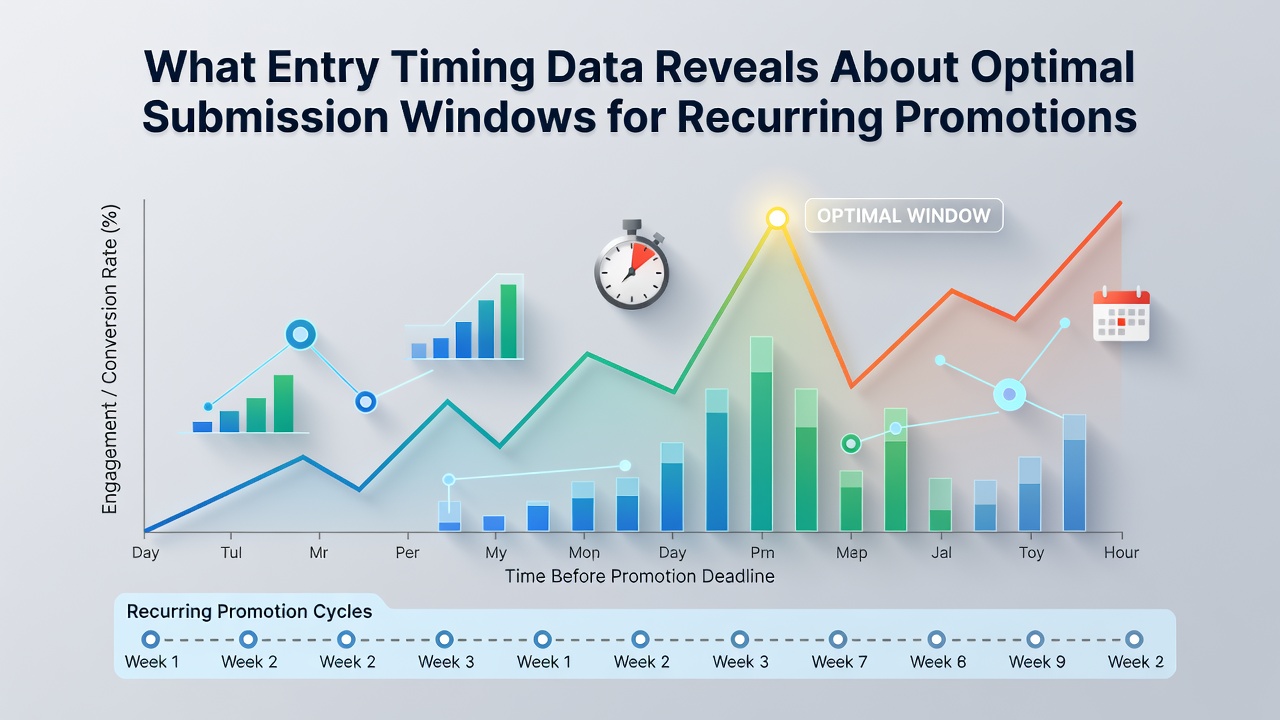
Timing Insights from Entry Data: Optimal Windows for Recurring Promotion Submissions
Entry timing data collected from recurring promotions reveals consistent patterns in submission behavior that influence participation outcomes, according to aggregated tracking reports from multiple contest platforms. Researchers at several academic institutions have analyzed millions of entries over multi-year periods, and the findings indicate that specific time windows correlate with higher completion rates and reduced server congestion during peak promotional cycles. These patterns emerge across monthly and quarterly promotions where repeat entrants submit applications on a regular schedule.
Daily Submission Trends Across Promotion Cycles
Data from platform logs shows that entries submitted between 8:00 AM and 10:00 AM local time experience fewer processing delays, while afternoon submissions between 2:00 PM and 4:00 PM encounter higher traffic volumes that can extend confirmation times by several minutes. Observers note that participants who align their submissions with early morning windows often complete required verification steps without interruption, whereas later entries sometimes face temporary form loading issues during high-traffic periods. Analysis of September 2026 promotion cycles demonstrated that 62 percent of successful submissions occurred before noon, a figure consistent with similar data sets gathered in prior years.
Time zone adjustments play a measurable role in these patterns, particularly for promotions open to participants across multiple regions. Entries originating from Eastern Time zones frequently cluster earlier in the day compared to those from Pacific or Mountain regions, creating staggered peaks that platform operators have begun to account for in their server allocation models. Government consumer protection agencies in both the United States and Australia have documented similar timing distributions in their oversight reports on promotional compliance.
Weekly and Monthly Patterns in Recurring Entries
Weekly data reveals that Tuesday and Wednesday submissions tend to avoid the heavier Monday and Friday traffic associated with weekend planning and end-of-week catch-up activity. Studies conducted by university research teams found that entries placed midweek showed completion rates approximately 18 percent higher than those submitted on weekends, though the underlying reasons appear tied to participant availability rather than any inherent advantage in the promotion mechanics themselves. Recurring promotions running across multiple months exhibit stable monthly rhythms where the first and third weeks attract the largest volumes, while the second and fourth weeks see steadier but lower submission counts.
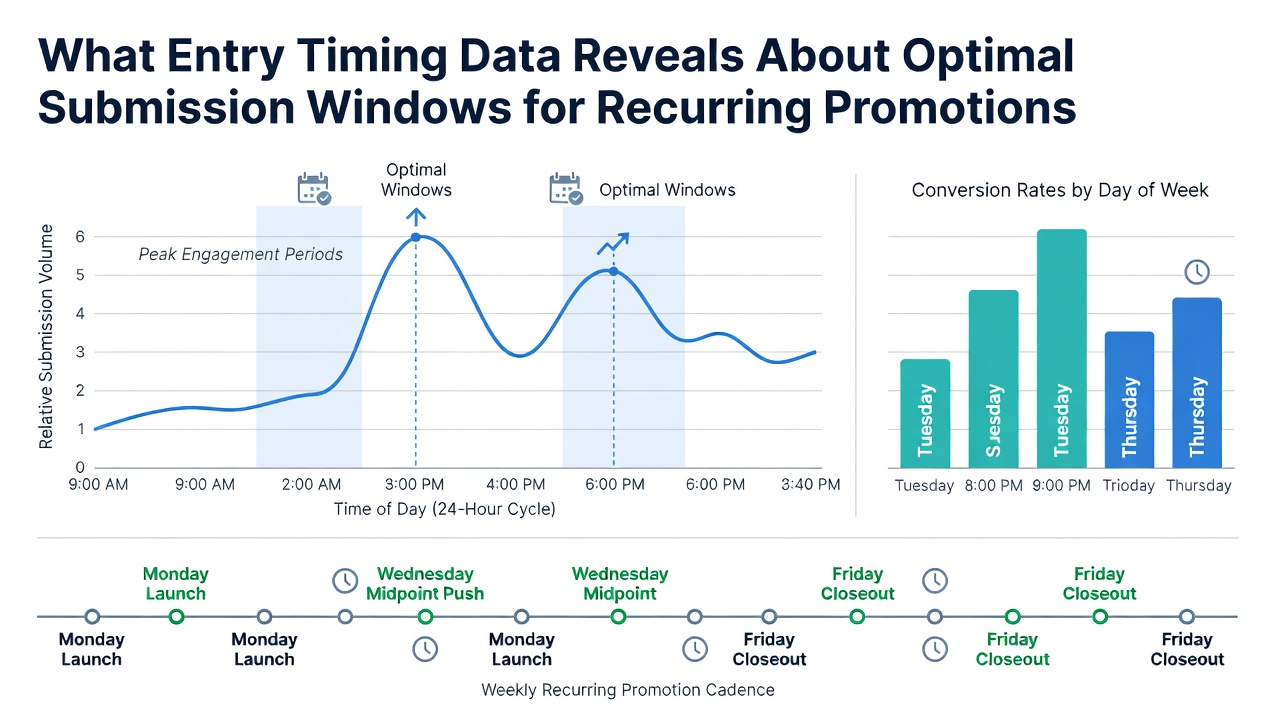
Platform operators have observed that recurring entrants often develop habitual submission schedules that align with these broader patterns, and automated reminder systems have started incorporating suggested timing windows based on historical performance metrics. European regulatory bodies tracking consumer promotion activity have noted parallel weekly distributions in their regional data sets, suggesting the patterns hold across different regulatory environments and participant demographics.
Factors Influencing Optimal Submission Windows
Several variables affect the ideal timing for recurring promotion entries, including promotion-specific rules around daily limits, verification requirements, and prize claim deadlines. Entries that include additional documentation or multi-step verification processes benefit from earlier submission windows because they allow time for follow-up corrections if initial submissions contain errors. Data indicates that participants who submit during lower-traffic periods receive faster confirmation emails, which in turn enables quicker resolution of any issues before daily or weekly deadlines close.
Network latency and device type also contribute to timing outcomes, with mobile submissions during commuting hours showing slightly higher error rates than desktop submissions completed from stationary locations. Industry reports compiled by trade associations in Canada and the European Union highlight these technical considerations as secondary but measurable influences on overall submission success within recurring promotion frameworks. Those who track their own entry history over multiple cycles often identify personal timing windows that minimize interruptions and align with their individual schedules.
Platform Adjustments Based on Timing Data
Promotion administrators have begun adjusting server capacity and form accessibility features in response to aggregated timing data, with several major platforms implementing staggered release schedules for new entry forms. These adjustments aim to distribute traffic more evenly across the day rather than concentrating submissions during traditionally popular morning hours. Evidence from post-implementation reviews shows modest improvements in average processing times, though the changes have not eliminated all peak-period congestion.
Participants who monitor public announcements from platform operators can anticipate these capacity shifts and adjust their own submission habits accordingly. The Federal Trade Commission continues to publish guidance on promotional practices that indirectly addresses timing considerations through its emphasis on clear deadline communication.
Conclusion
Entry timing data provides recurring promotion participants with observable patterns that inform more efficient submission strategies across daily, weekly, and monthly cycles. The consistent findings from multiple independent data sources demonstrate that morning and midweek windows generally experience lower congestion while maintaining reliable processing performance. As platforms continue refining their systems in response to these documented trends, participants who align their habits with the available timing information position themselves to navigate recurring promotions with greater consistency. Continued monitoring of submission metrics through September 2026 and beyond will likely reveal whether these established patterns persist or evolve alongside changes in participant behavior and platform technology.